
QJMotor patents single-cylinder ‘V-Twin’ Engine
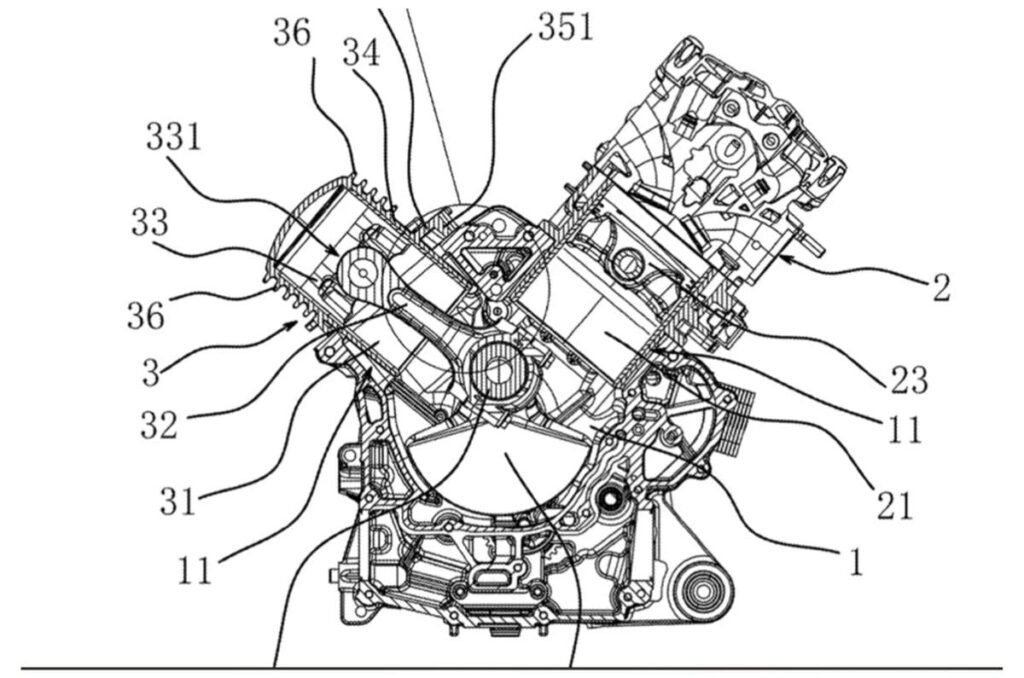
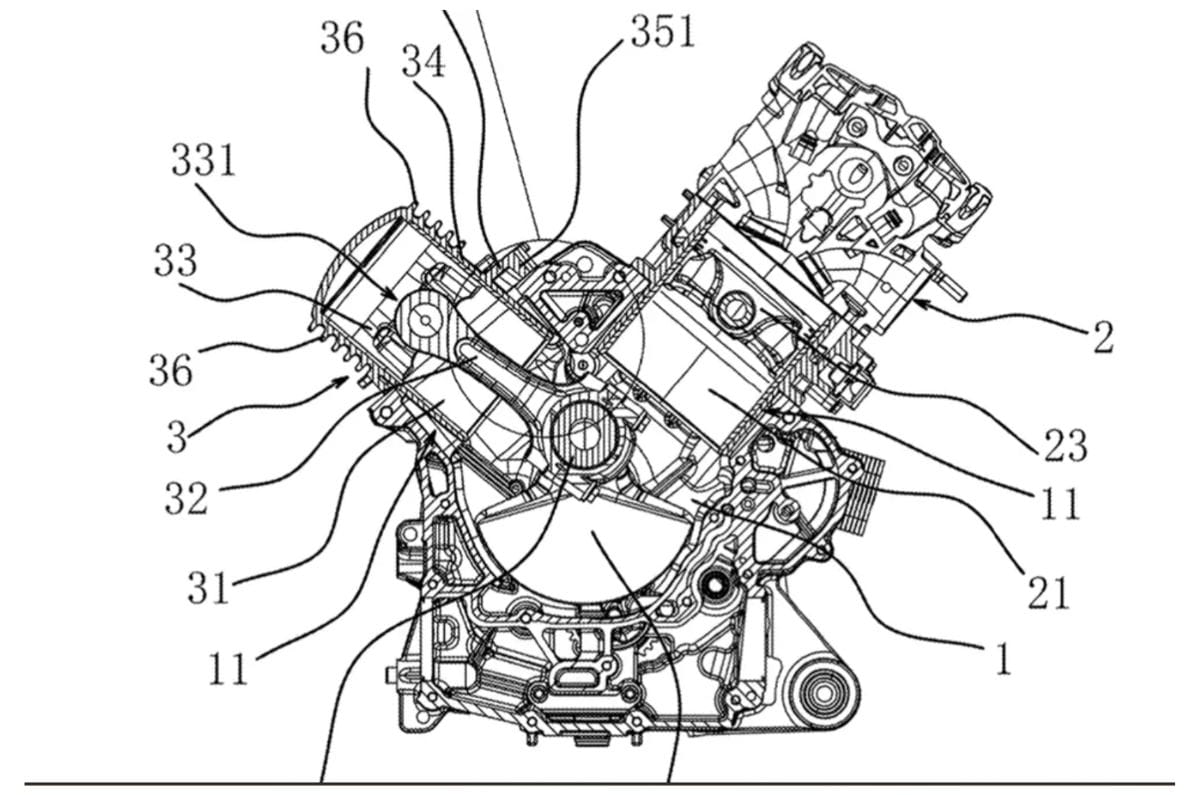
One of the biggest drawbacks of single-cylinder engines, especially higher-displacement ones, is widely agreed to be vibration. Until now, companies have mostly stuck to using counterbalancer shafts as the preferred way to keep it in check. But with QJMotor’s latest patent in the US, we might just have a more interesting and potentially more affordable way to deal with them.
- Uses a smaller ‘dummy’ cylinder as a counterweight
- More cost-effective than gear-operated counterbalancer shafts
Single-cylinder engine with a V-Twin-like configuration
A dummy piston in the second cylinder only cancels out vibrations
Technically speaking, the patent has been filed by QJMotor’s parent firm, Geely Auto Group, and it demonstrates an innovative approach to controlling engine vibrations in a single-cylinder mill. The patent drawing shows an engine crankcase with two cylinder openings at an 80-degree angle, visually resembling a V-twin engine. In the patent images, the larger bore on the right contains the actual combustion cylinder, with a standard piston performing the four-stroke action (intake, compression, combustion, and exhaust). The dummy cylinder on the left bore has a piston that is connected to the same crankshaft via a connector rod. However, this piston has an air vent, meaning it does not act as a combustion chamber; rather, it simply moves up and down as a counterweight through the crankshaft’s rotation, cancelling out the vibration produced by the ‘real’ cylinder.
Lack of piston rings underlined as the major improvement
Cylinders and the pistons are cleverly offset too
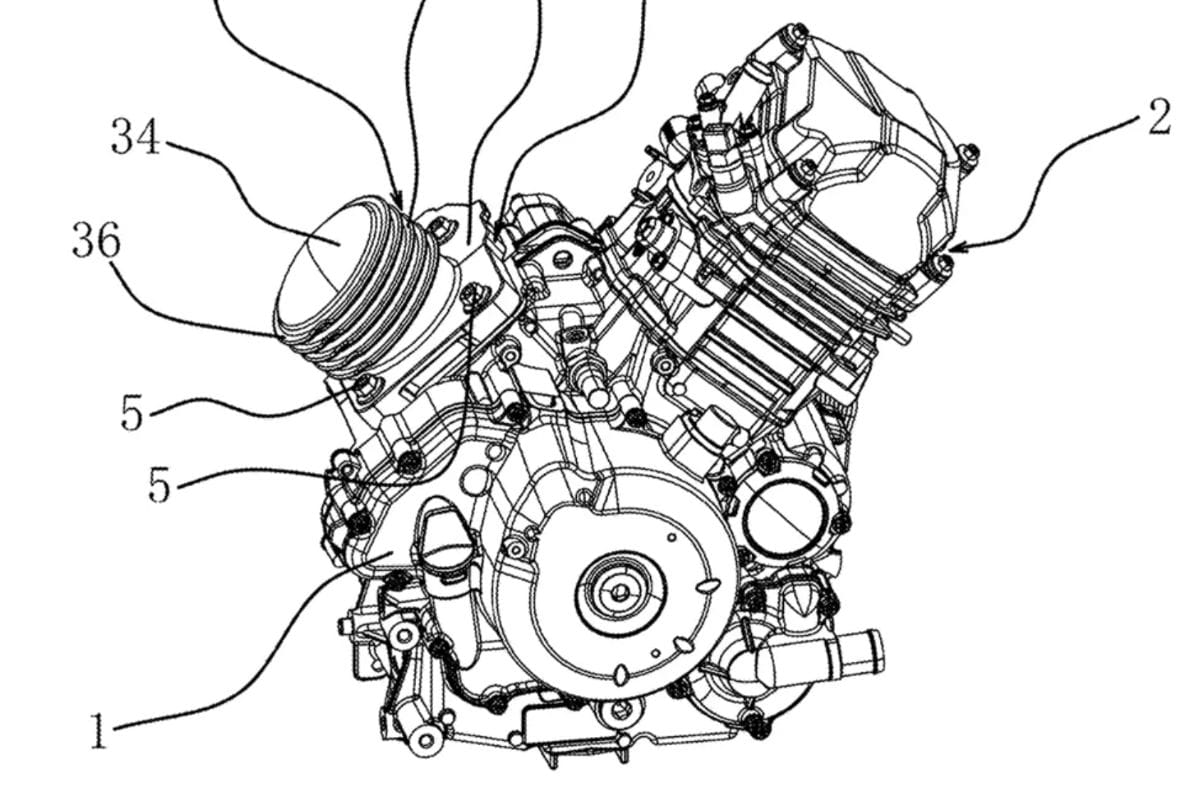
The second piston lacks piston rings since it’s not sealing a combustion chamber, which removes friction and drag. The source also underlines that the presence of the piston rings (and the friction and drag they produced) was the main flaw in earlier attempts at this configuration. Both connecting rods share the same crankpin as well to minimise the size of the entire assembly.
The cleverer part is that, despite the cylinders themselves being angled at 80 degrees, the pistons are angled at 90 degrees. This wider angle is made possible by housing the balancing cylinder in a separate component that’s bolted onto the crankcase with a flange, rather than being machined directly into the block. And because this cylinder offers some clearance against the bore, the piston can travel along its offset path. This allows the effective angle between the two cylinders to be wider than that of the casing itself. Lastly, since the balancer piston has no conventional intake or exhaust valves, it gets cooling fins to reduce heat buildup.
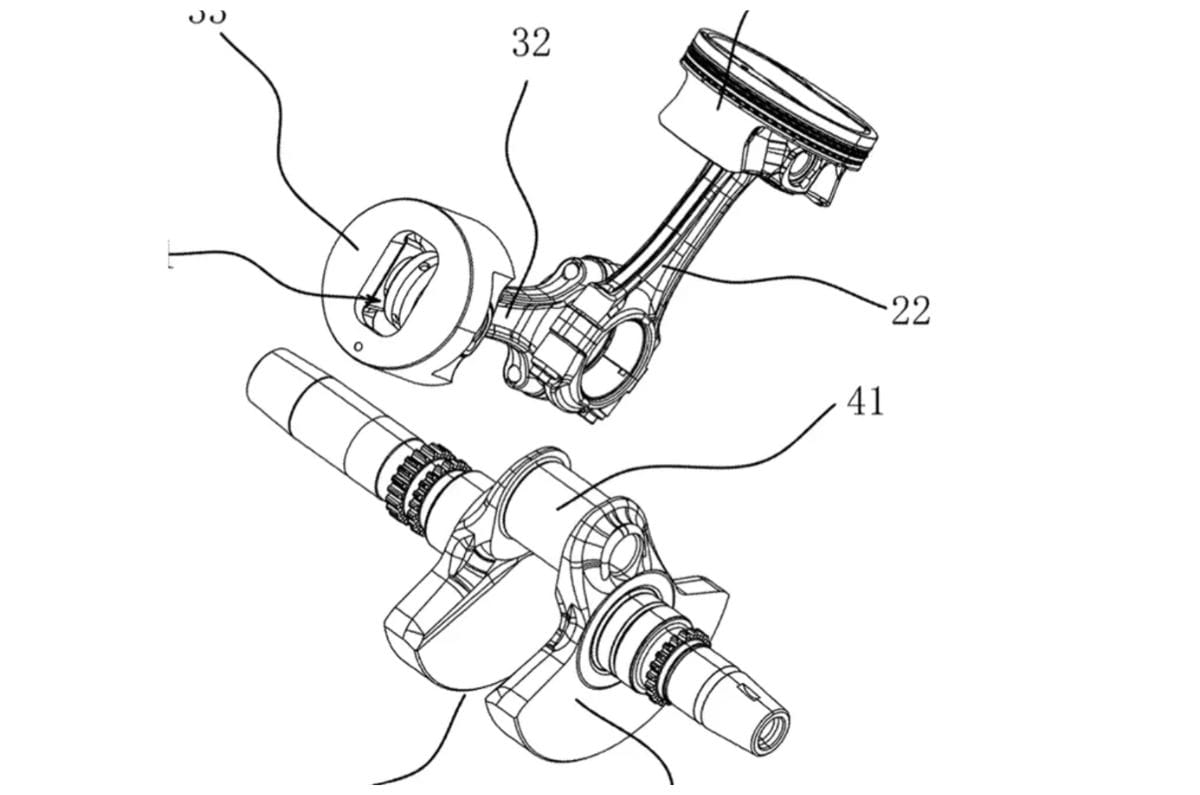
The patent details the goal behind the design: to achieve a proper balance-shaft system, but at a lower cost and less complex design. The patent was published by the United States Patent and Trademark Office on August 27, and there’s no indication that it’ll make its way onto a production motorcycle anytime soon.
Source: MCN